

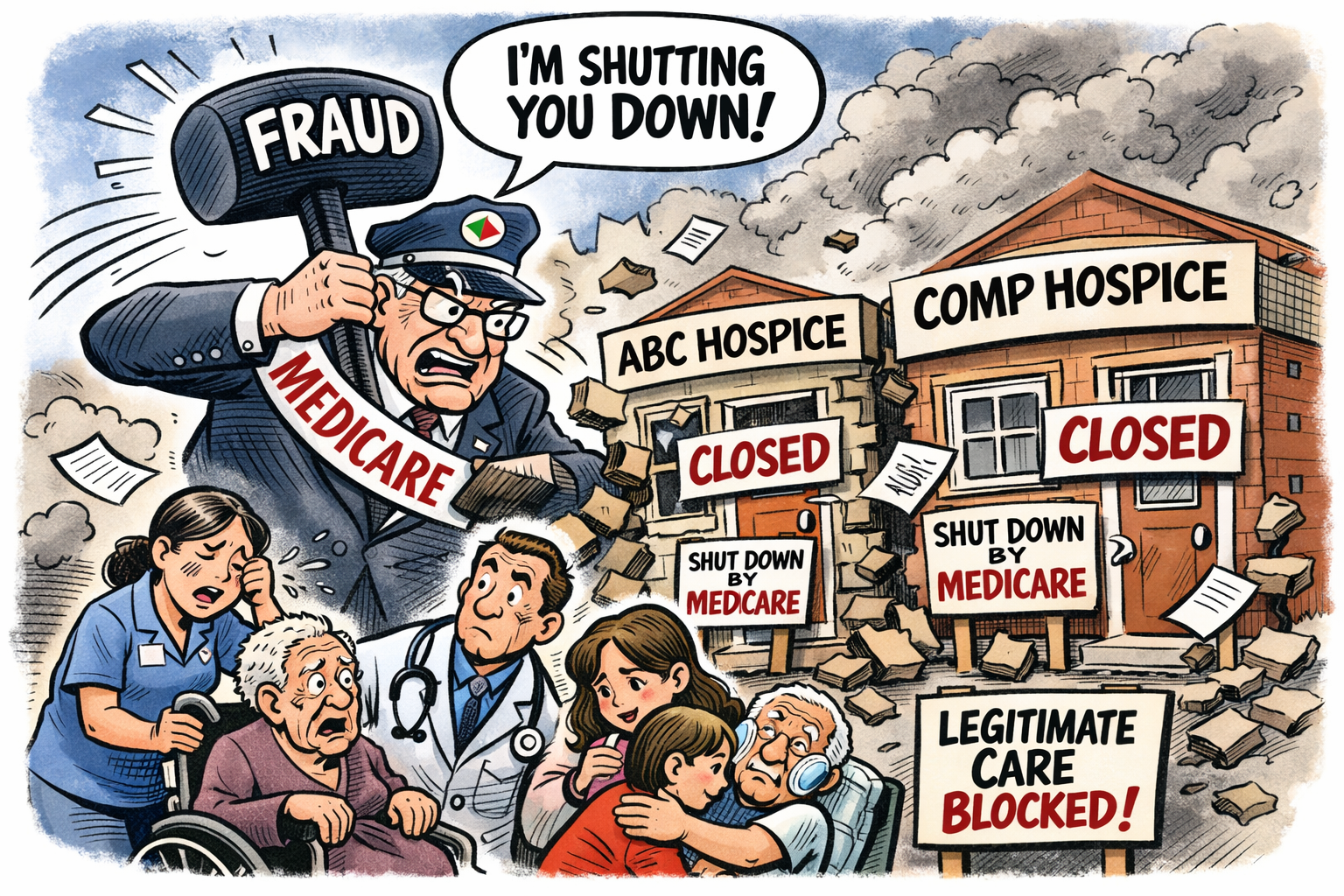
The federal government has made fighting health care fraud a cornerstone of its health policy agenda. Billions of dollars are lost annually to fraudulent schemes, and few dispute the need for strong oversight. But a growing number of providers, attorneys, and policy experts say Medicare’s enforcement strategy may be inflicting severe harm on legitimate health care businesses, often before any finding of fraud is reached, while also produces significant cost savings for the federal system.
Medicare officials have repeatedly emphasized the need to reduce improper payments, a category that federal estimates place in the tens of billions of dollars annually. Even modest reductions translate into substantial budgetary savings. Critics argue that this financial pressure has reshaped enforcement priorities, incentivizing aggressive actions that remove providers from the system entirely rather than correcting compliance issues.
“What we are seeing is enforcement that functions as cost containment,” said a former Medicare compliance official who requested anonymity due to ongoing professional ties to the industry. “Once a provider is shut down or excluded, Medicare doesn’t just stop alleged improper payments, it eliminates all future spending associated with that provider.”
At the center of the controversy is Medicare’s authority to suspend payments based on a “credible allegation of fraud,” a standard that does not require proof or a prior hearing. While designed as a protective measure, health care attorneys say the policy often has irreversible consequences.
“A payment suspension is effectively a death sentence for most small health care providers,” said a health care defense attorney who has represented hospice agencies in federal investigations. “Even if the provider is ultimately cleared, the business is usually gone by then.”
Two hospice providers, which will remain anonymous by request, illustrate the high stakes of this enforcement approach.
According to public records and legal filings, both organizations were subjected to Medicare fraud investigations that resulted in payment suspensions and regulatory actions. In each case, the enforcement measures reportedly disrupted operations almost immediately. With Medicare reimbursements forming the primary revenue source for hospice care, the suspensions halted cash flow, forcing service reductions, staff layoffs, or closure before any final adjudication of the allegations.
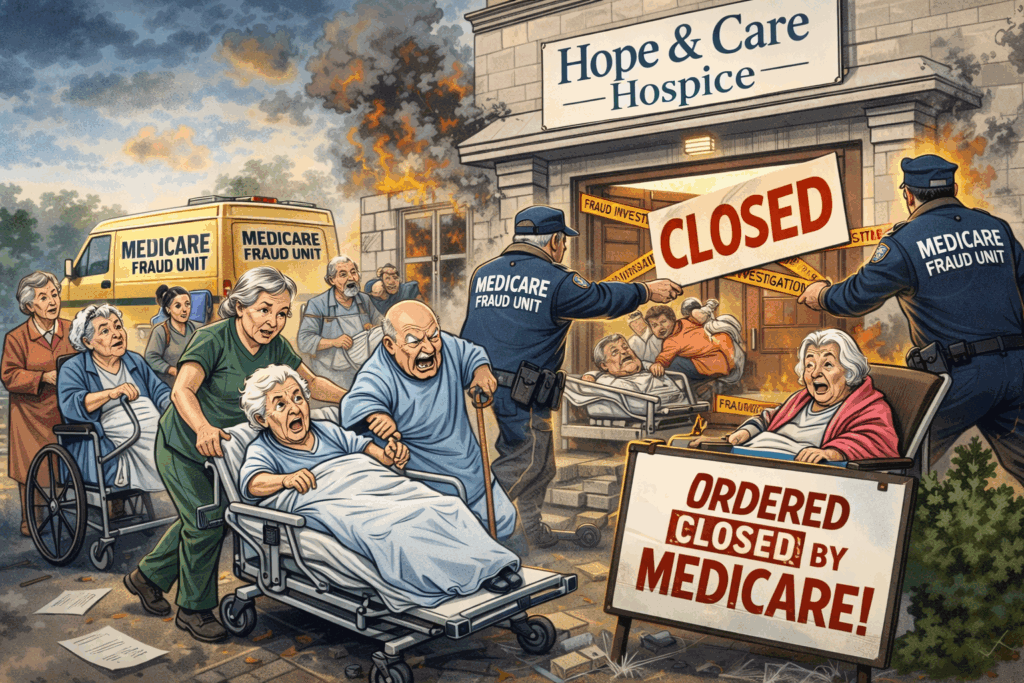
A former hospice executive familiar with similar cases described the process as “financial triage under investigation.” “You are presumed operationally guilty,” the executive said. “You lose funding first, and only later are you given the chance to argue your case.”
Experts say hospice providers are particularly vulnerable because of the subjective nature of Medicare’s eligibility and documentation requirements. Prognoses of terminal illness, length of stay determinations, and medical necessity judgments often involve clinical discretion. Differences in interpretation can later be reframed as fraud.
“The rules are complex, and hindsight is perfect,” said a former Medicare contractor auditor turned whistleblower. “What might be considered reasonable clinical judgment at the time can later be labeled improper when viewed through a cost reduction lens.”
Once flagged, providers may face audits by Medicare contractors and civil investigations overseen by the U.S. Department of Justice. Even when cases do not result in criminal charges, the reputational and financial consequences can be permanent. Banks withdraw financing, referral partners disengage, and patients are transferred elsewhere.
Data driven enforcement has further expanded Medicare’s reach. Algorithms identify billing “outliers,” but health policy analysts caution that outlier status does not equate to fraud. Providers serving higher acuity patients or underserved populations may naturally bill at higher rates, increasing their exposure to scrutiny.
From a fiscal perspective, the outcome is clear. Every provider removed from Medicare represents an immediate and long term reduction in program spending. Critics argue that this dynamic risks conflating fraud prevention with budgetary savings.

Patient advocates warn that aggressive enforcement may undermine Medicare’s core mission. When legitimate providers exit the system, access to care narrows, particularly in rural and underserved areas. In hospice care, disruptions can occur during the final stages of life.
“Fraud enforcement should protect patients,” said one national hospice policy advocate. “But when enforcement actions lead to abrupt closures, patients and families bear the consequences.”
None of this diminishes the reality of health care fraud, but it raises a central question, whether Medicare’s current enforcement framework adequately distinguishes intentional fraud from regulatory noncompliance, and whether the pursuit of cost savings has eclipsed due process.
In hindsight, policy makers should call for reforms that balance oversight with fairness, including clearer standards, graduated penalties, and meaningful opportunities to correct alleged deficiencies before legitimate health care businesses, and the patients they serve, are lost.