

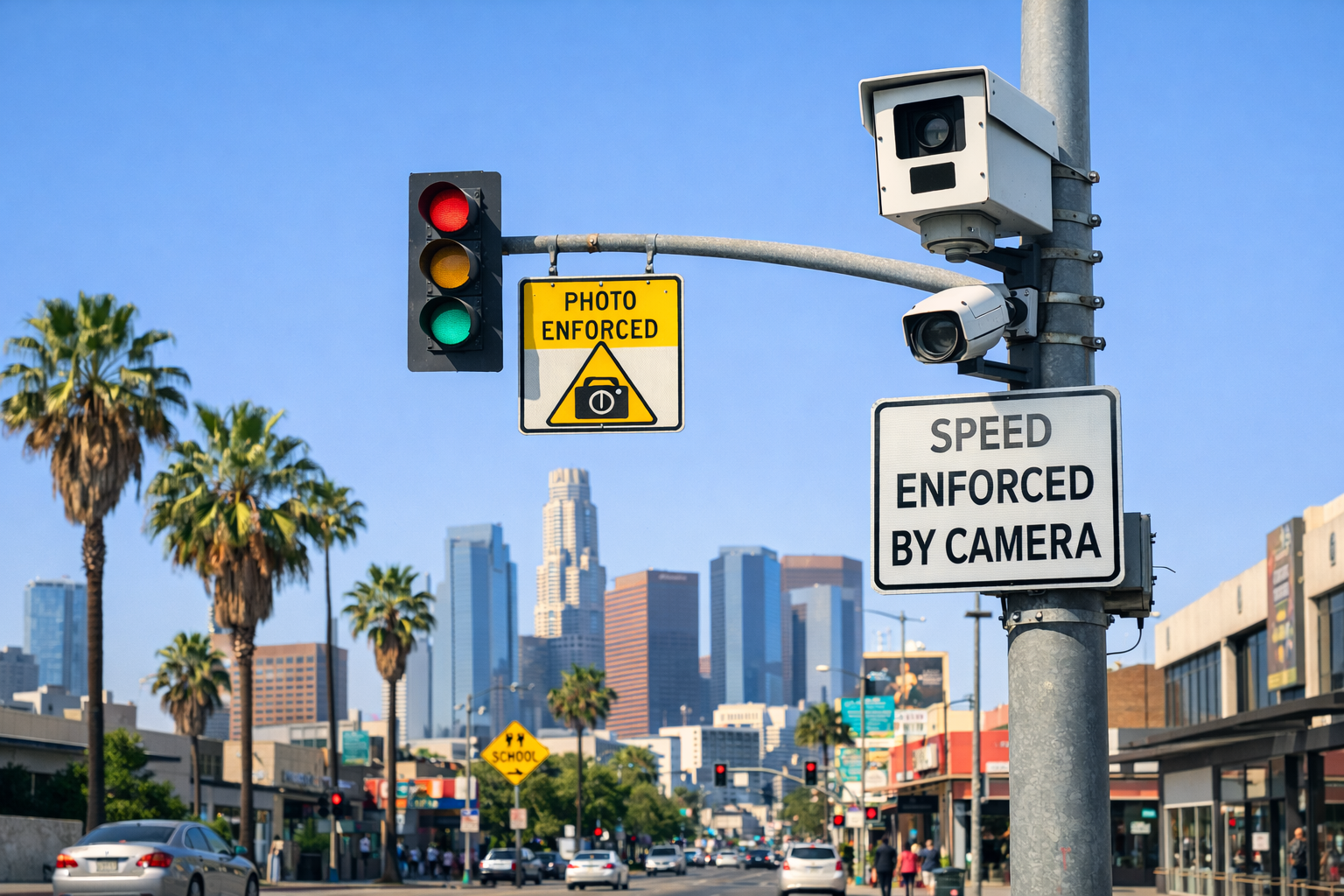
In 2026, Los Angeles will begin issuing speed tickets generated not by police officers, but by automated cameras, a change city leaders say is aimed squarely at saving lives on some of the city’s most dangerous streets. The program marks a major shift in how traffic laws are enforced in the nation’s second-largest city and reflects a broader statewide move toward technology-based road safety.
Why Los Angeles Is Turning to Speed Cameras
Speeding has become one of the most persistent traffic safety problems in Los Angeles. According to city transportation officials, excessive speed is a factor in nearly half of all traffic fatalities. Despite years of enforcement campaigns, collisions involving pedestrians and cyclists, especially in lower-income neighborhoods, remain stubbornly high.
City leaders argue that traditional traffic stops alone are no longer enough. Automated speed enforcement cameras, they say, offer a consistent, round-the-clock way to slow drivers down in places where serious crashes happen most often.
“Speed is the number-one cause of traffic deaths in Los Angeles,” transportation officials have said repeatedly. “If we can reduce speed, we can reduce fatalities.”
How the 2026 Program Works
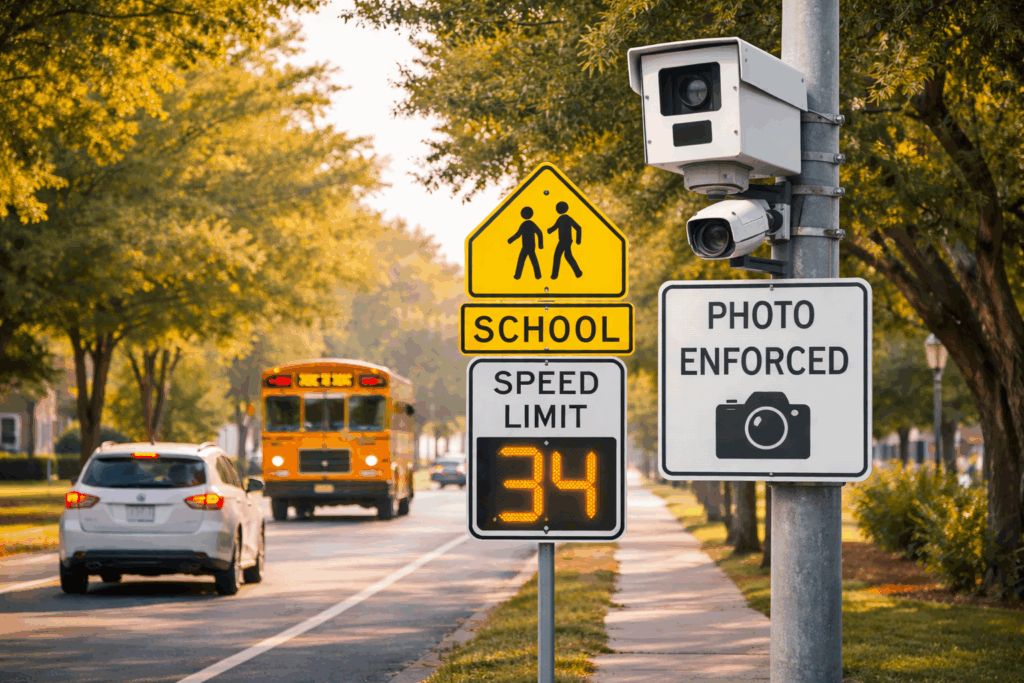
Beginning in 2026, Los Angeles will activate speed-safety cameras at a limited number of locations as part of a state-approved pilot program. The cameras will be placed primarily in school zones, high-injury corridors, and areas with a history of severe crashes, rather than on freeways or random residential streets.
Here is how the system works:
- Cameras use radar or laser technology to measure a vehicle’s speed.
- If a vehicle exceeds the posted speed limit by a set threshold, the system captures an image of the license plate.
- A citation is reviewed by city staff and then mailed to the registered vehicle owner.
Importantly, the cameras do not photograph drivers’ faces. The city says the system is designed to focus on vehicles, not individuals, and to limit unnecessary data collection.
Warnings First, Then Fines
Los Angeles plans to begin the rollout with a warning period. During this phase, drivers caught speeding by the cameras will receive notices without fines, giving residents time to adjust to the new enforcement method.
Once full enforcement begins, fines are expected to be income-adjusted, meaning lower-income drivers would pay less than higher-income violators for the same offense. City officials say this approach is intended to prevent the cameras from becoming a revenue generator that disproportionately affects low-income communities.
Repeat and extreme speeding violations, however, could still carry higher penalties.
Support and Concerns
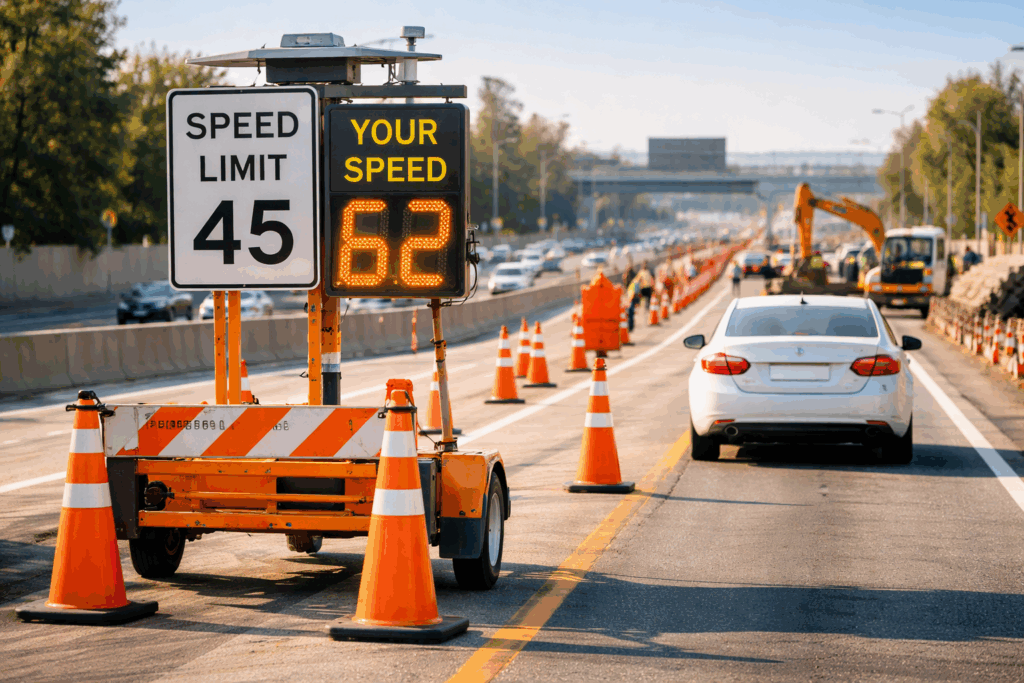
Supporters of the program point to evidence from other cities showing significant reductions in speeding and serious crashes after speed cameras are installed. They also note that automated enforcement removes the risk of traffic stops escalating into dangerous encounters.
Critics remain skeptical. Some drivers worry about privacy, accuracy, and the potential for over-ticketing. Others argue that road design, not enforcement, should be the city’s primary focus.
City officials counter that the camera program is part of a broader Vision Zero strategy that includes safer street design, better signage, and traffic-calming measures such as narrower lanes and protected bike paths.
What Drivers Should Expect
As 2026 progresses, Angelenos will start seeing “Speed Enforced by Camera” signs in select neighborhoods. Officials emphasize that the goal is not to surprise drivers, but to change behavior.
For Los Angeles, the success of the program will ultimately be measured not by the number of tickets issued, but by whether fewer families lose loved ones on city streets. If the pilot proves effective, camera-operated speed enforcement could become a permanent part of how the city keeps its roads safer, one mile per hour at a time.